
 The easiest way to lose weight and eat healthier is to learn the oil’s your body can’t process. Now, what does that actually mean? Simply put: if you use these oils, you will be gumming up the works! That creates inflammation and prevents your body from processing food, the way it’s supposed to. People are starting to steer away from seed oils. Thinking of it that way, gives me clarity.
I bring you three expert sources today, to explain it better.
The New York Post says:
The oils most often singled out in the controversy are the so-called “Hateful Eight,” a term coined by Dr. Cate Shanahan: canola, corn, cottonseed, grapeseed, soy, sunflower, safflower and rice bran.
And I am finding that no matter who you talk to, the names of the oils do vary. I think at this point people are steering away from Corn oil. The oils that come up the most on labels are: Canola, Sunflower and Safflower. And since lately the manufacturers of many boxed items are using Canola, Sunflower and Safflower Oils and now surprisingly enough, highly processed Palm Oil (because they are cheaper and more readily available), that’s what you get to notice when you shop. You can get it into your head that your body doesn’t process these oils and then make a smarter, healthier decision.
Here’s what experts say about the oils your body can’t process:
1. Dr. Andrew Weil, M.D. – Integrative Medicine Expert
Dr. Andrew Weil warns against seed oils like sunflower, safflower, corn, cottonseed, soy, rice bran, and canola oils. He notes that these oils are high in linoleic acid, an omega-6 fatty acid that can increase inflammation in the body. Excessive consumption of omega-6 fats, especially when not balanced with omega-3 fats, contributes to chronic inflammation, which is linked to various health issues.
2. Verywell Health – Health Information Resource
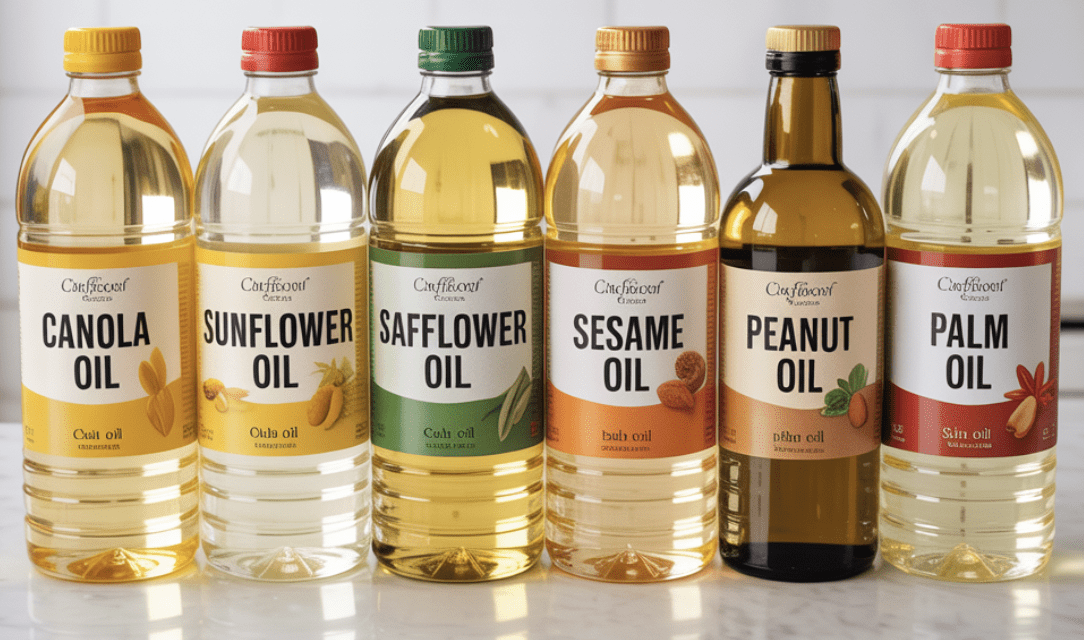
Verywell Health discusses the health implications of consuming highly refined vegetable oils. These oils undergo extensive processing, including bleaching and deodorizing, which strips them of beneficial compounds like antioxidants and vitamin E. Additionally, they are prone to oxidation, especially when heated, leading to the formation of harmful compounds that can cause cellular damage and promote inflammation.
3. Health.com – Health and Wellness Publication
Health.com highlights that highly refined oils like canola, corn, and soybean oils are processed to extend shelf life and neutralize flavor, but this process removes beneficial nutrients. These oils are high in polyunsaturated fats, which are susceptible to oxidation at high temperatures, producing free radicals that can damage cells and contribute to chronic diseases. Moreover, the imbalance of omega-6 to omega-3 fatty acids in these oils can promote inflammation.
Here are the oils your body CAN process!
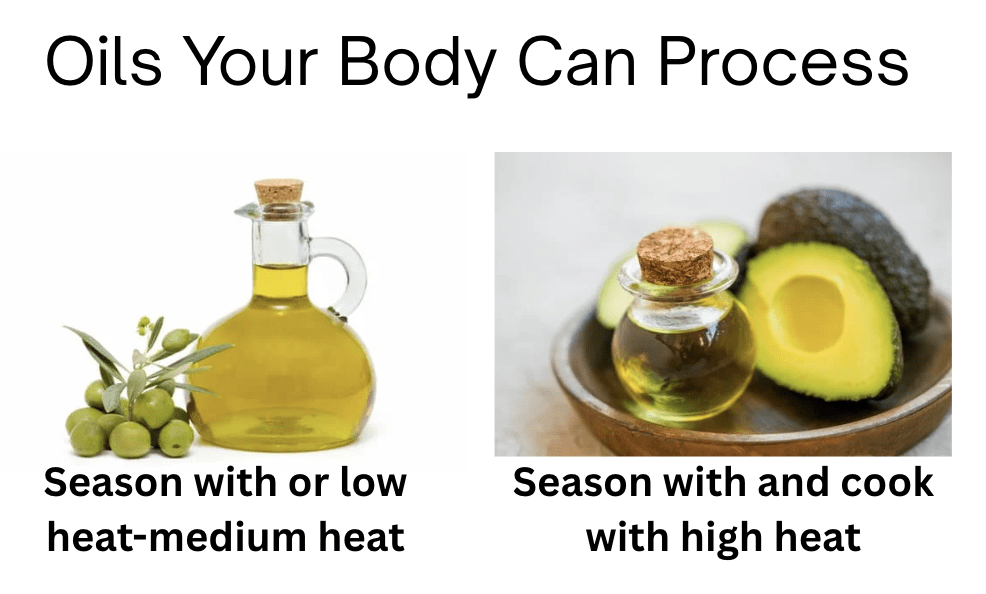
So what oils can you use? Olive oil for dressings and up to medium heat to sauté with. Avocado Oil, which you can use to cook with at even high temperatures. The third, that is not my favorite (because it’s a high saturated fat) is Coconut Oil. And even a fourth oil is Flaxseed oil.
I also like nut oils, like walnut. So you still have lots of choice when it comes to oils that your body will process.
And I will say that I do occasionally use Sesame oil: I cook with in small amounts, and the darker toasted one I will put in a dressing, because it becomes even more toxic, when you add heat to it.
You know the saying: “Everything in moderation …. including moderation.” So bad oils should be a once in a while thing.
In a nutshell …. why you should learn the oils that your body can’t process!
-
High Omega-6 Fatty Acid Content: Excessive omega-6 intake, especially without sufficient omega-3s, can lead to chronic inflammation.
-
Oxidation and Free Radical Formation: Processing and heating these oils can produce harmful compounds that damage cells.
-
Loss of Nutritional Value: Refining processes strip oils of beneficial nutrients like antioxidants and vitamins.
-
Association with Chronic Diseases: Regular consumption is linked to increased risks of heart disease, diabetes, and other inflammatory conditions.
Now please, pullleease start reading your labels. Knowing these oils are bad makes shopping so much easier. You see it on a label, you put the item back on the shelf! And that’s my two cents! Happy Healthier Eating!
 Your membership helps feed those in need through No Face Goes Unfed, bringing hope to San Diego and then nationwide.